

What if this were your daughter?
Sanctions, child suffering, and the human cost of conflict

Welcome to new subscribers and regular readers! Thank you for joining me for today’s song, “My Daughter” by David Rovics. If you’d like to hear the song before you read about it, I’ve included a YouTube video below the article.
Below, you’ll find my interpretation of the lyrics which are written in italics. For Japanese students, vocabulary words in bold are provided in Japanese below. TOEIC (PBT) 450+, Eiken 2, CEFR B1.
(443 words)
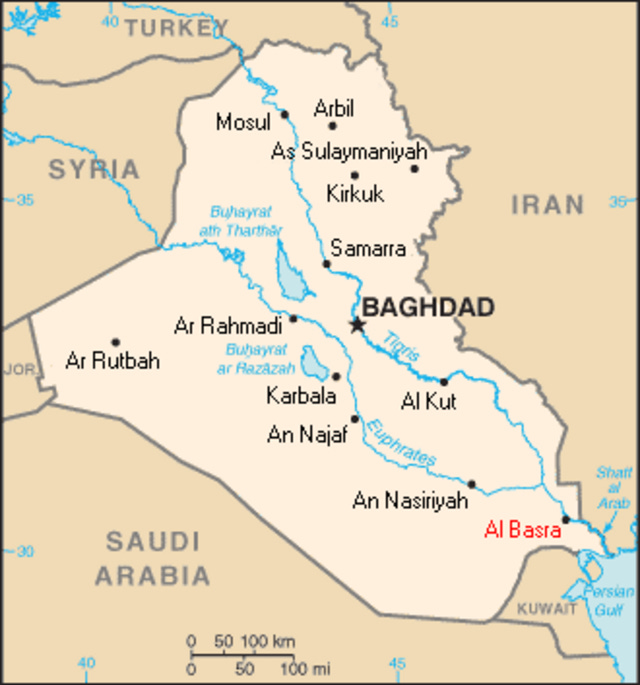
In the 1900s, the country of Iraq invaded Kuwait. The UN wanted Iraq to follow international rules, so they decided to punish the country. The UN put limits on Iraq’s business trade with other countries. These limits led to shortages of food and medicines, and many people died as a result. According to the UN, half a million children died from disease and not having enough to eat.
This song is about a little girl in a war zone. We see her making a necklace out of flowers. The singer imagines that he sees his own daughter in the little girl’s eyes.
She was picking yellow flowers
Smiling at the sunlight
Weaving stems to make a necklace
Working hard to get it all right
She reached out to trade it
For the bread her mama brought her
And when I looked into her eyes, I saw my daughter
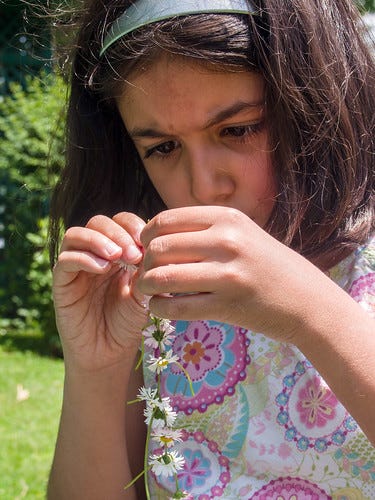
The singer watches the little girl as she plays. He remembers his childhood when he played with no shoes on.
Her feet were bare as mine were
When I grew up in the country
And just like her I watched my mother
Hanging out the laundry
Now she’s grabbed some clothes and darted off
And her mama chased and caught her
And when I looked into her eyes, I saw my daughter
Suddenly, a bomb goes off. The little girl tries to hide under the pieces of broken walls of a building. Finally, she gets tired (tire, v.) and goes home.
Now she’s running down the alleyway
Dust rising up behind her
She hides beneath the rubble
Where nobody can find her
And when she tires and walks back home
Her mama tells her that she loves her
And when I looked into her eyes, I saw my daughter
The girl and her mother have nothing. She has to sleep on the cold floor and doesn’t have a blanket, only some old pieces of fabric. She’s cold, and she shakes. She misses her brother and wants to be with him. Military planes continue to bomb the cities.
And when the sun sets she is hungry
But there’s no more bread to give her
The cement floor is cold tonight
And beneath the rags she shivers
And as the jet planes scorch the sky
She’s longing for her brother
As the bombs fall in the distance
She wonders, will the next one fall much closer
It’s not so far to Basra
And I could be her father
And when I looked into her eyes, I saw my daughter

Wars happen. Conflicts happen.
How can we demand that children be protected?
What if this were my daughter?
Vocabulary
weave 織り交ぜる
stem 茎
grab 掴む
dart off 飛び出す
alleyway 路地裏
rise up (埃が)舞い上がる
beneath the rubble 瓦礫の下
rags ぼろ布
shiver 震える
scorch 焦げる
Notes:
David Rovics writes: I was inspired by Kathy Kelly’s group, Voices in the Wilderness, to write this song, among others. Particularly the story I heard from Kathy or Brad or someone there in Chicago, how when they started protesting the deadly sanctions regime in public, they got a lot of shit from some passersby.
Then when they changed their banner so it just had the picture of an Iraqi girl and the caption, “is she your enemy?”, people stopped giving them a hard time. The message got through that way.
https://www.davidrovics.com/songbook/my-daughter-2/
Source
Crossette, B. The New York Times. Iraq sanctions kill children, U.N. reports. The New York Times. https://timesmachine.nytimes.com/timesmachine/1995/12/01/075264.html?pageNumber=9 . Accessed 12 July 2025.
Did you sign up by mistake? Don’t have time to read? You can easily change your subscription here:

#英検2級 #TOEIC450 #CEFRB1
Why is war even allowed in this day and age? It is so barbaric, and no child should have to live with the terror and destruction that it brings. Thanks for sharing this, Louise.
My heart breaks for the children in war zones. Great piece. Do your Japanese students respond well to music in learning?